Avoid fly-tipping fines in Marylebone: quick actions
Posted on 02/06/2026
If you have rubbish piling up outside a flat, a house, or a managed property in Marylebone, the pressure builds fast. One missed collection, one overfilled bin bag, or one bad choice about where to leave waste can turn into a costly headache. The good news? There are quick actions that can help you avoid fly-tipping fines in Marylebone and deal with waste the right way, without dragging it out for days.
This guide is written for real-life situations: a late house clear-out, a bulky item that will not fit in the lift, a landlord handing over keys, or a builder's pile of waste that appeared a bit too quickly. We will keep it practical, local, and honest. And yes, a lot of problems can be prevented in five minutes if you know what to check first.
For readers who want a wider view of the area and the way local living works here, our Marylebone resident advice guide is a useful companion piece. If you are already dealing with bulky items or a mess that needs moving, the pages for rubbish clearance in Marylebone and local rubbish collection may also help you make a faster decision.
Expert summary: The quickest way to stay clear of fly-tipping trouble is simple: keep waste contained, use a lawful collection route, never leave items on the street "for later", and document what you arranged. Small habits save big fines.

Table of Contents
- Table of contents
- Why avoiding fly-tipping fines in Marylebone matters
- How the quick actions approach works
- Key benefits and practical advantages
- Who this is for and when it makes sense
- Step-by-step guidance
- Expert tips for better results
- Common mistakes to avoid
- Tools, resources and recommendations
- Law, compliance, standards and best practice
- Options, methods and comparison table
- Case study or real-world example
- Practical checklist
- Conclusion
- Frequently Asked Questions
Why avoiding fly-tipping fines in Marylebone matters
Fly-tipping is not just an eyesore. In a busy neighbourhood like Marylebone, it can create access problems, damage the feel of a street, and attract complaints very quickly. One bag left beside a full bin can snowball into a mess that neighbours, managing agents, and enforcement teams notice almost immediately. That is especially true around narrow residential streets, shared entrances, and busy commercial corners.
To be fair, many people do not set out to fly-tip. They are often trying to solve a rubbish problem in a rush. Maybe the refuse room is full. Maybe a furniture item is too heavy to carry back inside. Maybe a builder says, "leave it out and I'll sort it." That is where things go wrong. Intent matters, but it does not always stop a fine or a complaint. The safest move is to act early and keep the waste in a lawful, traceable route.
In Marylebone, quick action also matters because the area has a lot of mixed use: residents, offices, hospitality, and short turnaround properties. Waste left in the wrong place can look like abandonment, even if it was only there for an hour. That timing can be enough to cause problems. And once photos are taken, well, the story becomes harder to control.
If you are dealing with a larger clear-out, services like house clearance in Marylebone or office clearance can be far safer than trying to split the load into several "just for now" piles. The same logic applies to builders waste clearance, where a few loose sacks on a pavement can become a compliance issue very fast.
How the quick actions approach works
The idea is straightforward: stop waste from becoming a visible, unmanaged problem. You do that by deciding quickly whether the items can be reused, collected, stored securely, or removed by a licensed service. The longer waste sits outside, the more likely it is to be treated as fly-tipping or an illegal obstruction.
The process is not complicated, but it does need discipline. First, identify the type of waste. Then separate anything that can be reused, donated, recycled, or placed in a legitimate collection route. After that, choose the most suitable disposal method. If you are unsure, defaulting to "leave it out overnight" is the wrong answer. Every time.
People often ask whether a single item counts. In practice, the issue is not just quantity; it is the circumstances. A sofa left on a pavement without arrangement, rubbish dumped beside a tree, or a stack of black bags outside a block can all trigger complaints. A lawful route, clear timing, and tidy containment make all the difference.
For urgent situations, it can help to look at a service that handles fast turnarounds. Our junk removal in Marylebone page is useful for mixed loads, while furniture disposal is a better fit for bulky items that should not be left outside. If you are unsure what category your rubbish falls into, that is usually a sign to get guidance before moving it.
Key benefits and practical advantages
A quick, organised approach does more than reduce risk. It also saves time, avoids neighbour friction, and keeps your property or premises looking cared for. That matters a lot in an area like Marylebone, where first impressions are not a small thing. You can tell straight away when a street has been kept on top of, and you can also tell when it has not.
- Lower risk of fines: waste is less likely to be treated as abandoned when it is handled promptly and properly.
- Less stress: you do not spend days wondering who will move the pile or whether someone will complain.
- Better neighbour relations: tidy waste management prevents the "whose rubbish is that?" conversation.
- Cleaner access routes: shared hallways, front steps, and pavements stay usable.
- Better recycling outcomes: sorting early helps recover more recyclable material.
There is also a quieter benefit: you make future waste decisions easier. Once a household, landlord, or business has a simple routine, waste stops becoming a crisis. That is often the real win. No drama. No last-minute scramble at 8:30pm with bags in the hallway.
If sustainability is part of your thinking, it is worth reviewing the local approach to responsible disposal on the recycling and sustainability page. It is a sensible next step if you want your rubbish handled in a way that is both practical and more environmentally aware.
Who this is for and when it makes sense
This guidance is relevant to more people than you might think. Fly-tipping risk is not only a problem for people dumping waste intentionally. It also affects anyone whose rubbish might sit outside, even temporarily, and anyone who is responsible for a property or shared space.
- Residents with bulky items, end-of-tenancy waste, or bin overflow.
- Landlords and letting agents needing fast clearance between occupants.
- Homeowners doing decluttering, decorating, or moving.
- Offices clearing desks, chairs, files, and packaging.
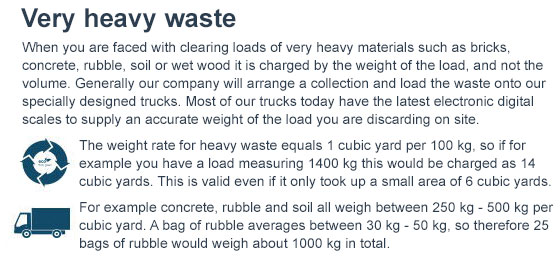
- Builders and tradespeople dealing with rubble, timber, and mixed construction waste.
- Block managers overseeing communal storage and access points.
This is also useful when timing is awkward. Maybe a collection slot has been missed. Maybe a property sale is moving faster than expected. Or maybe, truth be told, the mess has been there a bit too long already and everyone is looking at it like it belongs to no one. We have all seen that sort of thing.
For property-related moves and clearances, the local context matters. If you are dealing with a sale, a purchase, or a handover, the related pages on Marylebone real estate dealings and buying property in Marylebone can help you plan the clearance side without last-minute panic.
Step-by-step guidance
If you want the quickest practical route, use this sequence. It is simple, and honestly, simple is what usually works under pressure.
- Stop the waste from spreading. Keep bags tied, lids shut, and loose items together. Do not scatter things across the pavement or driveway.
- Identify what needs removing. Separate household waste, recycling, bulky items, garden cuttings, office rubbish, and builder's debris.
- Check whether it can stay indoors or in a secure store. If it can be kept off the street safely, do that while you arrange the next step.
- Choose the correct disposal route. A standard collection, a specialist removal, or a skip may all be appropriate depending on the load.
- Keep evidence of the arrangement. Save confirmations, receipts, or messages so there is a record that the waste was being handled responsibly.
- Move only at the right time. Put items out only when the service or collection point requires it, not hours earlier.
- Inspect the area after removal. Check for stray packaging, broken bits, or anything that could later be described as fly-tipped residue.
One small but important habit: photograph the waste before collection if it helps you keep a record. That can be useful in disputed situations, particularly for managed properties. It is not glamorous, but it can save a lot of back-and-forth later. Little things, really.
If you are handling a larger or mixed load, compare your options before deciding. For example, skip hire in Marylebone may suit a planned project, while rubbish clearance can be better when you want a team to take everything away in one visit. For a one-off urgent job, that difference matters more than people expect.
Expert tips for better results
Quick action is not just about speed. It is about making the right move quickly. Here are the practical habits that usually reduce risk most effectively.
1. Treat pavement space like a shared asset
If waste goes outside, assume it affects everyone. Narrow pavements and shared entrances can create an immediate issue, especially if prams, deliveries, or wheelchairs need access. A bag that seems harmless to one person can be a real obstacle to another.
2. Avoid "temporary" piles
Temporary waste piles have a way of becoming permanent. If the plan is not clear within the hour, it probably is not clear enough. Move from "I'll deal with it later" to an actual action, even if that action is just booking a lawful collection.
3. Match the service to the waste type
Garden cuttings should not be handled like office furniture. Builder's rubble is not the same as a sofa. The more accurately you match the waste, the cleaner and cheaper the process tends to be. For example, garden waste removal is a better fit for green waste than a general mixed-load approach.
4. Plan around building access and neighbours
In blocks and terraces, timing really matters. Moving items through narrow communal areas at the wrong moment can cause complaints even before the waste leaves the property. In our experience, the best jobs are the boring ones: neat, scheduled, and almost invisible to everyone else.
5. Keep the paper trail
If there is ever a question about who arranged the waste handling, proof helps. Keep messages, payment records, and job notes together. That small habit makes compliance easier and reduces the chance of a misunderstanding turning into a formal complaint.
Common mistakes to avoid
Most fly-tipping issues start with a few avoidable mistakes. They are predictable, which is useful because predictable problems are easier to stop.
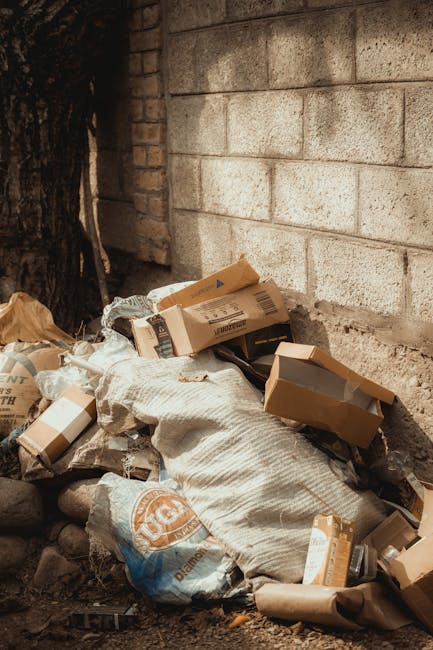
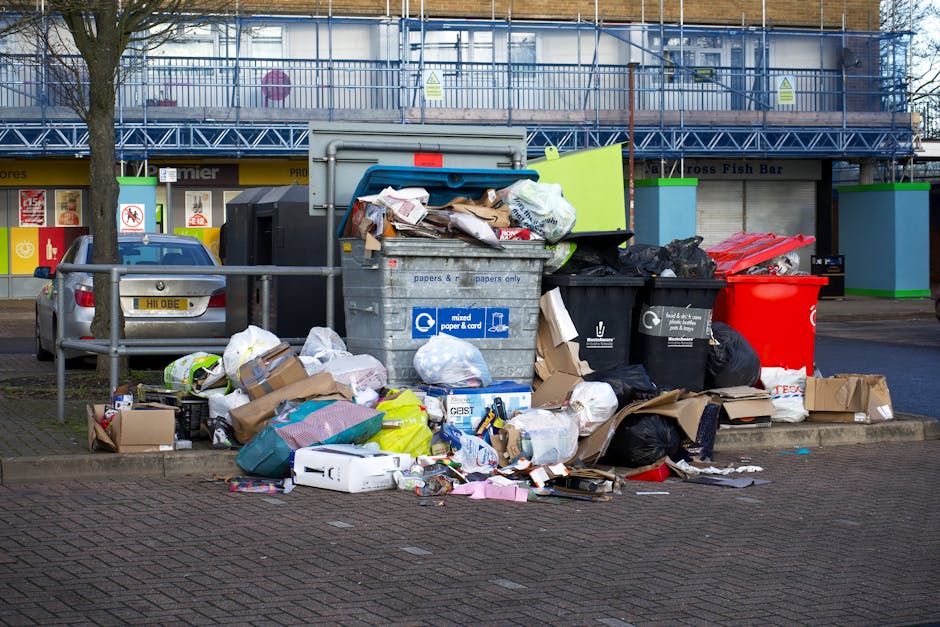
- Leaving rubbish beside full bins: that often looks like abandonment, not a temporary inconvenience.
- Assuming someone else will move it: if you placed it there, you may be treated as responsible until proven otherwise.
- Using an unverified collector: if waste is handed to the wrong person, the problem can come back to you.
- Breaking items up and scattering them: loose debris is more likely to be reported than contained waste.
- Overfilling bags and boxes: bursts, spills, and scraps make the area look unmanaged.
- Putting out items too early: even a short delay can invite weather damage, obstruction, or complaints.
One slightly awkward truth: a lot of "quick fixes" are not quick at all once a complaint lands. What looked like saving ten minutes can turn into hours of follow-up. A classic false economy. Happens all the time.
If you are clearing a flat, basement, loft, or garage, it is usually better to use a service designed for that environment. The pages for loft clearance and garage clearance are useful examples of how to keep waste contained until it is properly removed.
Tools, resources and recommendations
You do not need a complicated setup to stay on the right side of things. A few basic tools and habits are enough for most people.
- Heavy-duty bags and tied bundles to stop spillages.
- Labels or notes for separating recycling, donation items, and waste.
- Storage boxes or covered areas to keep items off the street.
- Phone photos for record-keeping.
- A contact point for removal so you are not hunting around at the last second.
As a recommendation, think about the size and timing of the task before choosing a service. Small, straightforward jobs are not the same as full-property clear-outs. A business moving out of offices will often need a different approach from a resident clearing one sofa and a few bags. The office clearance page can help if your issue is work-related, while house clearance suits larger domestic projects.
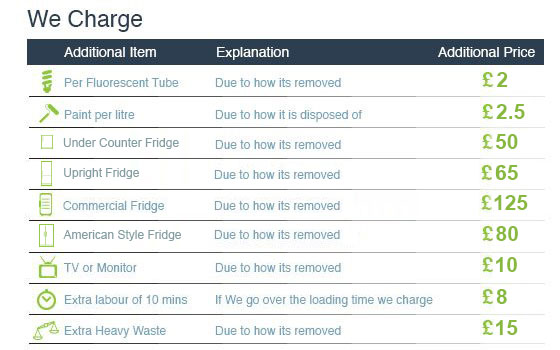
If you are still weighing the best route, the services overview is a practical place to compare what kind of support fits your situation. And if you want to understand pricing before committing, the pricing and quotes page is worth a look. No need to guess if you do not have to.
Law, compliance, standards and best practice
When waste is not handled correctly, the problem is not only visual. It can raise compliance and responsibility issues too. In the UK, waste must be managed so it does not become an environmental nuisance or an illegal deposit. In plain English, do not dump, do not abandon, and do not hand waste to someone unless you are satisfied they will deal with it properly.
Best practice is fairly straightforward, even if the wording behind it can sound dry:
- Keep waste contained until collection or removal.
- Use a proper, traceable route for disposal.
- Make sure anyone handling the waste is suitable for the job.
- Do not place items in communal or public spaces without permission and timing clarity.
- Separate recyclables where possible to reduce mixed waste.
That final point matters more than people realise. Mixed waste is harder to process, harder to explain, and often harder to keep tidy. Cleaner sorting is usually better for the environment and the job itself.
If safety and responsibility are part of your decision-making, the insurance and safety page gives helpful reassurance about the standards expected when a professional team is involved. And if you want to understand how the site handles your information when you make an enquiry, the privacy policy and terms and conditions are there for that reason.
Options, methods and comparison table
Not every situation needs the same solution. Sometimes a small collection is enough. Sometimes you need a same-day clearance because the pile is already creating risk. Here is a simple comparison to help you choose.
| Option | Best for | Strengths | Watch-outs |
|---|---|---|---|
| Bagged waste held indoors | Short delays before collection | Keeps the street clear, low risk | Only works if storage space is available |
| Scheduled rubbish collection | Routine household or small business waste | Simple, tidy, predictable | Not ideal for bulky or mixed loads |
| Bulky item removal | Sofas, beds, furniture, appliances | Fast relief, less manual lifting | Needs clear access and accurate description |
| Skip hire | Planned works and renovation waste | Good for ongoing projects | Requires space and good timing |
| Full clearance service | House, office, loft, garage, eviction, or end-of-tenancy jobs | Comprehensive, efficient, less hassle | Usually needs a bit more coordination |
For many Marylebone households, the difference comes down to urgency and access. A ground-floor flat with one bulky item may only need a quick removal. A top-floor property with mixed waste, broken furniture, and packaging is a different beast entirely. If you are dealing with a tough clearance and time is short, the page on same-day clearance for urgent Marylebone evictions is a good example of a fast-response use case.
Case study or real-world example
Picture a small Marylebone terrace where a family is moving out on a Friday afternoon. There are three chairs, two broken drawers, a handful of bags, and a few odd items from the loft. The temptation is to put everything by the front wall "just until morning". That is exactly the sort of moment where risk creeps in.
Instead, they sort the waste into two groups, keep it inside until the arranged pickup window, and use a proper clearance route for the bulky furniture. The bags are sealed, the corridor stays clear, and the front of the property does not turn into a little pile of mayhem. Nothing dramatic happens. Which, honestly, is the point.
A very similar approach works for blocks and estates too. For example, managing a shared clear-out line by line is often easier than trying to deal with the whole thing in one last-minute rush. That is one reason a resource like the W1U estate clearouts checklist can be helpful when multiple households or units are involved.
Another common real-world situation is bulky waste near high-footfall roads. Around places like Baker Street, waste left outside for too long is noticed quickly. If that sounds familiar, the Baker Street bulky waste removal guide covers that type of scenario in a more location-specific way.
Practical checklist
Use this checklist before anything goes outside. It is quick, and it helps more than people expect.
- Have I identified exactly what needs removing?
- Can any of it stay inside until collection?
- Is the waste tied, boxed, or bundled securely?
- Have I chosen the right disposal method for the load?
- Is the timing of collection clear?
- Do I have a record of the arrangement?
- Will the items block access or create a nuisance if left where they are?
- Have I separated recycling, reusable goods, and general waste?
- Do I know who is responsible for the waste until it is collected?
- Have I checked for leftover debris after moving the items?
If you can tick most of these off, you are already reducing risk a lot. Not perfectly, maybe, but enough to make a real difference. And that is usually what people need: a workable system, not a perfect one.
Conclusion
Avoiding fly-tipping fines in Marylebone is usually less about luck and more about making a few quick, sensible decisions before waste becomes visible and unmanaged. Keep items contained, choose the right disposal route, and act before a temporary pile turns into a complaint. Once you build that habit, the whole thing gets easier.
Marylebone is a busy, lived-in part of London, which means waste issues are noticed fast. The upside is that the same local reality also rewards good habits. A neat collection, a clear record, and a properly chosen removal option can save you stress, money, and a lot of awkward conversations. That is a win in anybody's book.
If you are dealing with rubbish now and want a straightforward next step, explore the relevant service pages, compare your options, and arrange removal before the pile grows. That small move often changes everything.
Get a free quote today and see how much you can save.


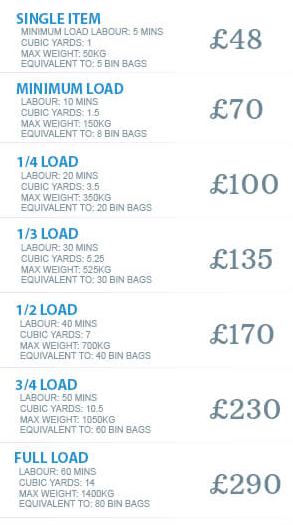
 Tipper Van - Rubbish Removal and Rubbish Disposal Prices in Marylebone, W1
 Luton Van - Rubbish Removal and Rubbish Disposal Prices in Marylebone, W1